Directions: Click the "Begin" button below to access an interactive drag and drop version of this graphics, which will help reinforce the concepts you have been studying.
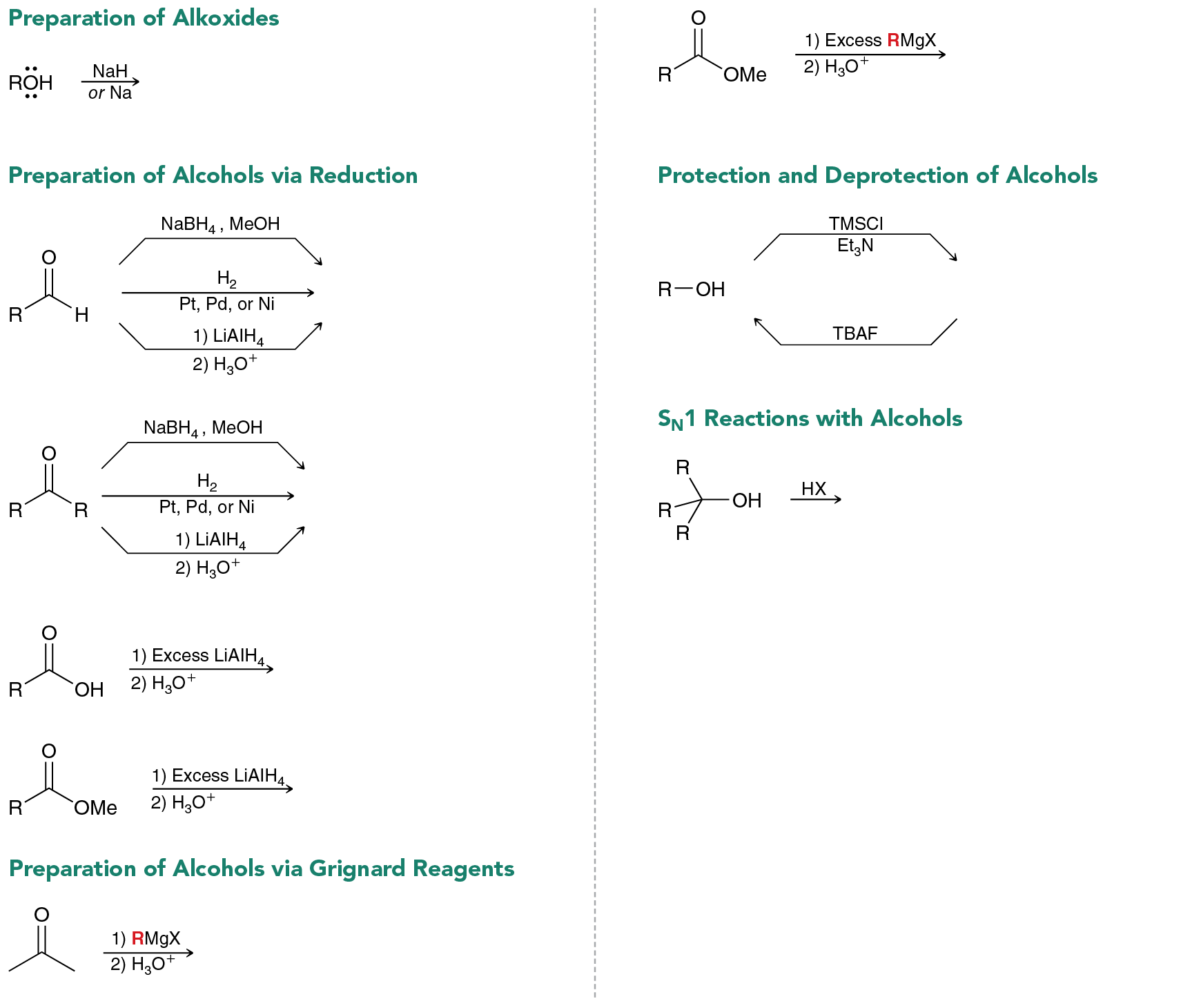
A reaction shows alcohol react with sodium hydride or sodium to form negatively charged alkoxy group and positively charged sodium atom. Four reactions are depicted. The first reaction shows three methods of formation of alcohol from aldehyde. The first method shows aldehyde react with sodium borohydride and methanol to form alcohol. The second method shows aldehyde react with hydrogen molecule and platinum, palladium, or nickel to form alcohol. The third method shows aldehyde react with lithium aluminum hydride first and hydronium second to form alcohol. The second reaction shows three methods of formation of secondary alcohol from ketone. The first method shows ketone react with sodium borohydride and methanol to form ketone. The second method shows ketone react with hydrogen molecule and platinum, palladium, or nickel to form alcohol. The third method shows ketone react with lithium aluminum hydride first and hydronium second to form alcohol. The third reaction shows carboxylic acid react with excess lithium aluminum hydride first and with hydronium second to form alcohol. The fourth reaction shows an ester react first with excess lithium aluminum hydride and second with hydronium to form alcohol plus methanol.
Two reactions are depicted. The first reaction shows ketone react first with alkyl magnesium halide and second with hydronium to form alcohol. The second reaction shows ester react with excess alkyl magnesium halide first and hydronium second to form alcohol and methanol. Two reactions show the deprotonation and protection of alcohol group in alkyl alcohol. The first reaction shows alcohol react with trimethylsilyl chloride and triethyl amine to form an intermediate where the alkyl group is bonded to an oxygen atom that is bonded to a trimethyl silyl (TMS) group. The second reaction shows the intermediate react with Tetrabutylammonium fluoride to form alcohol. A reaction shows a tertiary alcohol react with hydrogen halide to form alkyl halide and water.
Begin

Directions: Click the "Next" button below to access an interactive drag and drop version of this graphic, which will help reinforce the concepts you have been studying.

A reaction shows alcohol react with sodium hydride or sodium to form negatively charged alkoxy group and positively charged sodium atom. Four reactions are depicted. The first reaction shows three methods of formation of alcohol from aldehyde. The first method shows aldehyde react with sodium borohydride and methanol to form alcohol. The second method shows aldehyde react with hydrogen molecule and platinum, palladium, or nickel to form alcohol. The third method shows aldehyde react with lithium aluminum hydride first and hydronium second to form alcohol. The second reaction shows three methods of formation of secondary alcohol from ketone. The first method shows ketone react with sodium borohydride and methanol to form ketone. The second method shows ketone react with hydrogen molecule and platinum, palladium, or nickel to form alcohol. The third method shows ketone react with lithium aluminum hydride first and hydronium second to form alcohol. The third reaction shows carboxylic acid react with excess lithium aluminum hydride first and with hydronium second to form alcohol. The fourth reaction shows an ester react first with excess lithium aluminum hydride and second with hydronium to form alcohol plus methanol.
Two reactions are depicted. The first reaction shows ketone react first with alkyl magnesium halide and second with hydronium to form alcohol. The second reaction shows ester react with excess alkyl magnesium halide first and hydronium second to form alcohol and methanol. Two reactions show the deprotonation and protection of alcohol group in alkyl alcohol. The first reaction shows alcohol react with trimethylsilyl chloride and triethyl amine to form an intermediate where the alkyl group is bonded to an oxygen atom that is bonded to a trimethyl silyl (TMS) group. The second reaction shows the intermediate react with Tetrabutylammonium fluoride to form alcohol. A reaction shows a tertiary alcohol react with hydrogen halide to form alkyl halide and water.
Next

A reaction shows alcohol react with sodium hydride or sodium to form negatively charged alkoxy group and positively charged sodium atom. Four reactions are depicted. The first reaction shows three methods of formation of alcohol from aldehyde. The first method shows aldehyde react with sodium borohydride and methanol to form alcohol. The second method shows aldehyde react with hydrogen molecule and platinum, palladium, or nickel to form alcohol. The third method shows aldehyde react with lithium aluminum hydride first and hydronium second to form alcohol. The second reaction shows three methods of formation of secondary alcohol from ketone. The first method shows ketone react with sodium borohydride and methanol to form ketone. The second method shows ketone react with hydrogen molecule and platinum, palladium, or nickel to form alcohol. The third method shows ketone react with lithium aluminum hydride first and hydronium second to form alcohol. The third reaction shows carboxylic acid react with excess lithium aluminum hydride first and with hydronium second to form alcohol. The fourth reaction shows an ester react first with excess lithium aluminum hydride and second with hydronium to form alcohol plus methanol.
Two reactions are depicted. The first reaction shows ketone react first with alkyl magnesium halide and second with hydronium to form alcohol. The second reaction shows ester react with excess alkyl magnesium halide first and hydronium second to form alcohol and methanol. Two reactions show the deprotonation and protection of alcohol group in alkyl alcohol. The first reaction shows alcohol react with trimethylsilyl chloride and triethyl amine to form an intermediate where the alkyl group is bonded to an oxygen atom that is bonded to a trimethyl silyl (TMS) group. The second reaction shows the intermediate react with Tetrabutylammonium fluoride to form alcohol. A reaction shows a tertiary alcohol react with hydrogen halide to form alkyl halide and water.
Hide Graphic
Reset
View Graphic
Begin
Close